Wishes and feelings record. A printable record of what a child has said they want — asked properly, recorded in their words, and followed up so they can see what happened.
This is the paper version. CareOptix does the same job on a phone, with the record filed against the young person or the staff member automatically.
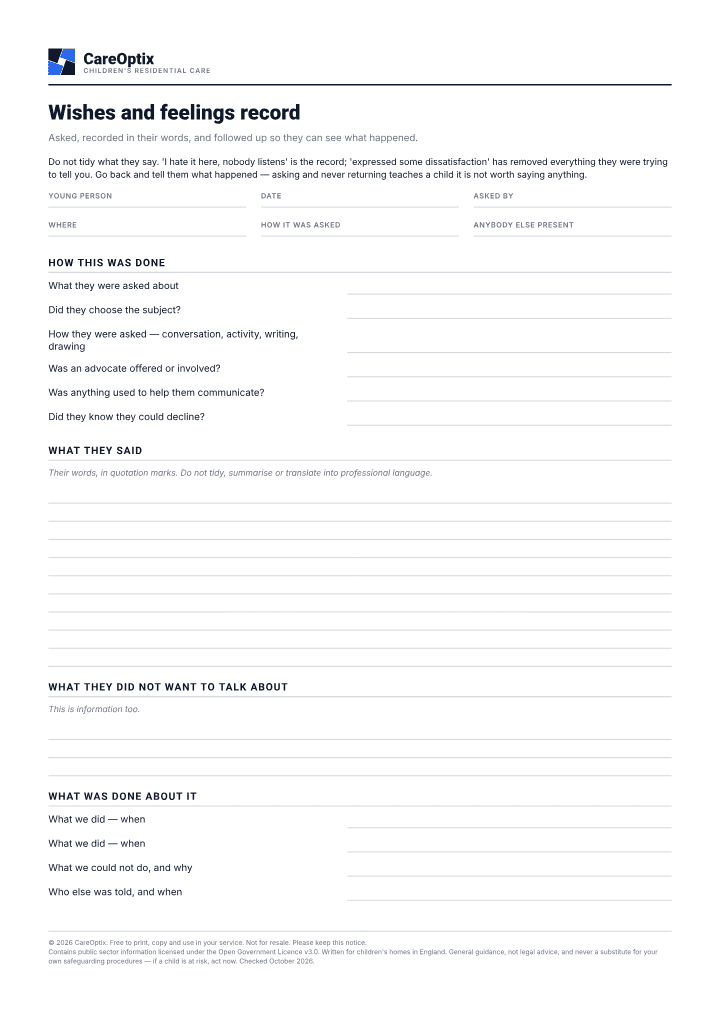
What is on the sheet
- The child, the date, who asked and how it was asked
- What the child was asked about, and whether they chose the subject
- What they said, in their own words, without tidying
- What they did not want to talk about, which is information too
- What was done as a result, and what could not be done and why
- How and when the child was told what happened, and what they said about that
Why this record matters
Asking children what they want is a statutory expectation and, more to the point, the only way a home works. What inspectors actually look for is not whether it was asked but whether anything changed — a file full of recorded wishes with no outcome against any of them demonstrates a process, not a culture.
That is why the last two sections exist. 'We asked, and here is what happened, and here is what we could not do and why we could not do it' is a complete record. Asking and then never going back is worse than not asking, because the child has learned something about whether it is worth saying anything.
Recording in the child's own words, without tidying them, matters more here than anywhere. A young person who says 'I hate it here, nobody listens' should have that written down, not 'expressed some dissatisfaction with the placement' — which is a sentence that has removed everything the child was trying to say.
What a child would not talk about is recorded because it is information. A young person who will not discuss contact with a family member has told you something, and a form with no room for it loses it entirely.
Use it with
- Daily log and key work recordA printable daily log and key work session record — what happened, what the child said and did, and what it means, written so a child could read it.
- Placement plan templateA printable placement plan — how this home will meet this child's needs day to day, written with the child rather than about them.
- Regulation 44 visit recordA printable structure for an independent visitor's report — what they looked at, who they spoke to, what the children said, and whether the home is meeting the standards.
Read more on this
© 2026 CareOptix. Free to print, copy and use in your service. Not for resale. Please keep this notice.
Contains public sector information licensed under the Open Government Licence v3.0. Written for children's homes in England. General guidance, not legal advice, and never a substitute for your own safeguarding procedures — if a child is at risk, act now. Checked October 2026.