Missing from care record. A printable record for a child missing or away from the home without agreement — what was done, who was told, and what the child said when they came back.
This is a record, not a protocol. What to do when a child goes missing comes from your home's missing from care procedure and your local arrangements with the police and the local authority, and those take precedence over anything here. Neither this sheet nor CareOptix decides whether a child should be reported missing; what the platform does is hold the record, link it to the others, and make a pattern visible before somebody notices it by chance.
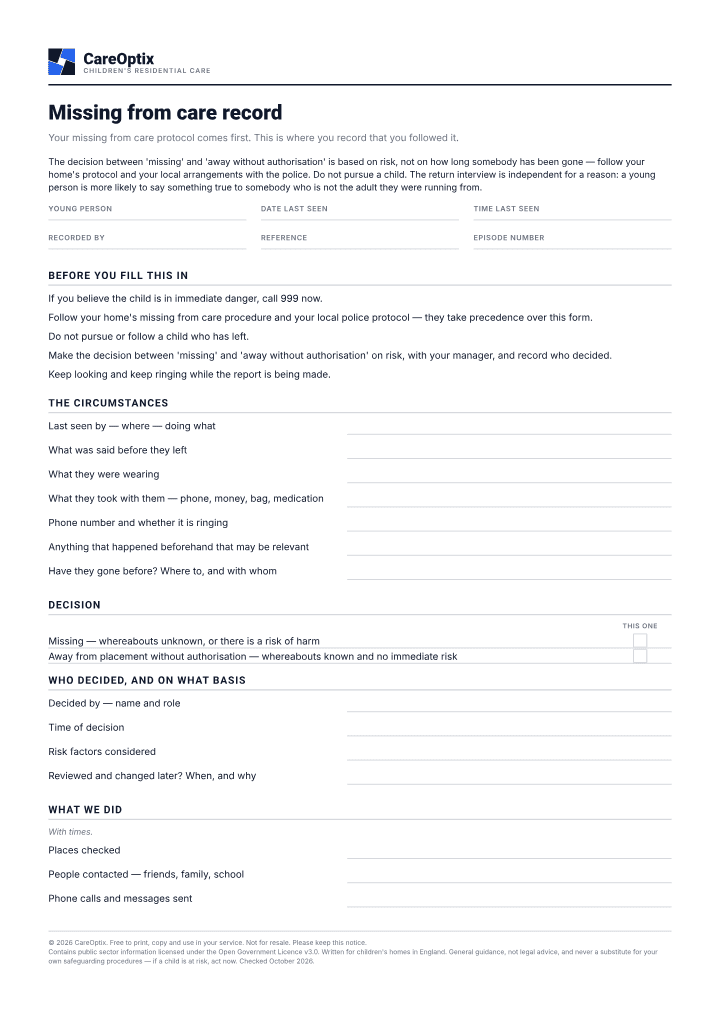
What is on the sheet
- A prominent instruction that this is a record, not a procedure, and the risk assessment comes first
- The child, when they were last seen, what they were wearing and what they took
- Whether this is missing or away without authorisation, and who decided
- Actions taken: places checked, people contacted, police report and reference
- Who was told — police, local authority, parents or those with parental responsibility
- The return: who saw them, how they were, the independent return interview offered, and what changed as a result
Why this record matters
Children going missing from care is a safeguarding matter with a specific framework around it, and the first thing this form says is that the framework comes first. Your home's missing from care protocol and your local arrangements with the police say what to do; this is where you write down that you did it.
The distinction between 'missing' and 'away from placement without authorisation' matters because it changes the response, and it is a decision taken on risk rather than on how long somebody has been gone. A form that treats every absence the same either over-reports and loses credibility with the police, or under-reports a child who is genuinely at risk.
What the child says when they come back is the most valuable information anybody will get about why they went. The return interview is independent for good reason — a child is more likely to say something true to somebody who is not the adult they were running from — and the home's job is to make sure it was offered and to record what happened.
Patterns are what this record exists to build. One absence is an event; the same child going to the same place every Thursday is intelligence about exploitation, and it only appears if somebody is reading the records together rather than filing them separately.
Use it with
- Safeguarding concern recordA printable record of a safeguarding concern — what was seen or said, what was done about it immediately, and who was told.
- Incident recordA printable incident record — what led up to it, what happened, what the child said afterwards, and what the home is going to do differently.
- Placement plan templateA printable placement plan — how this home will meet this child's needs day to day, written with the child rather than about them.
- Daily log and key work recordA printable daily log and key work session record — what happened, what the child said and did, and what it means, written so a child could read it.
Read more on this
© 2026 CareOptix. Free to print, copy and use in your service. Not for resale. Please keep this notice.
Contains public sector information licensed under the Open Government Licence v3.0. Written for children's homes in England. General guidance, not legal advice, and never a substitute for your own safeguarding procedures — if a child is at risk, act now. Checked October 2026.